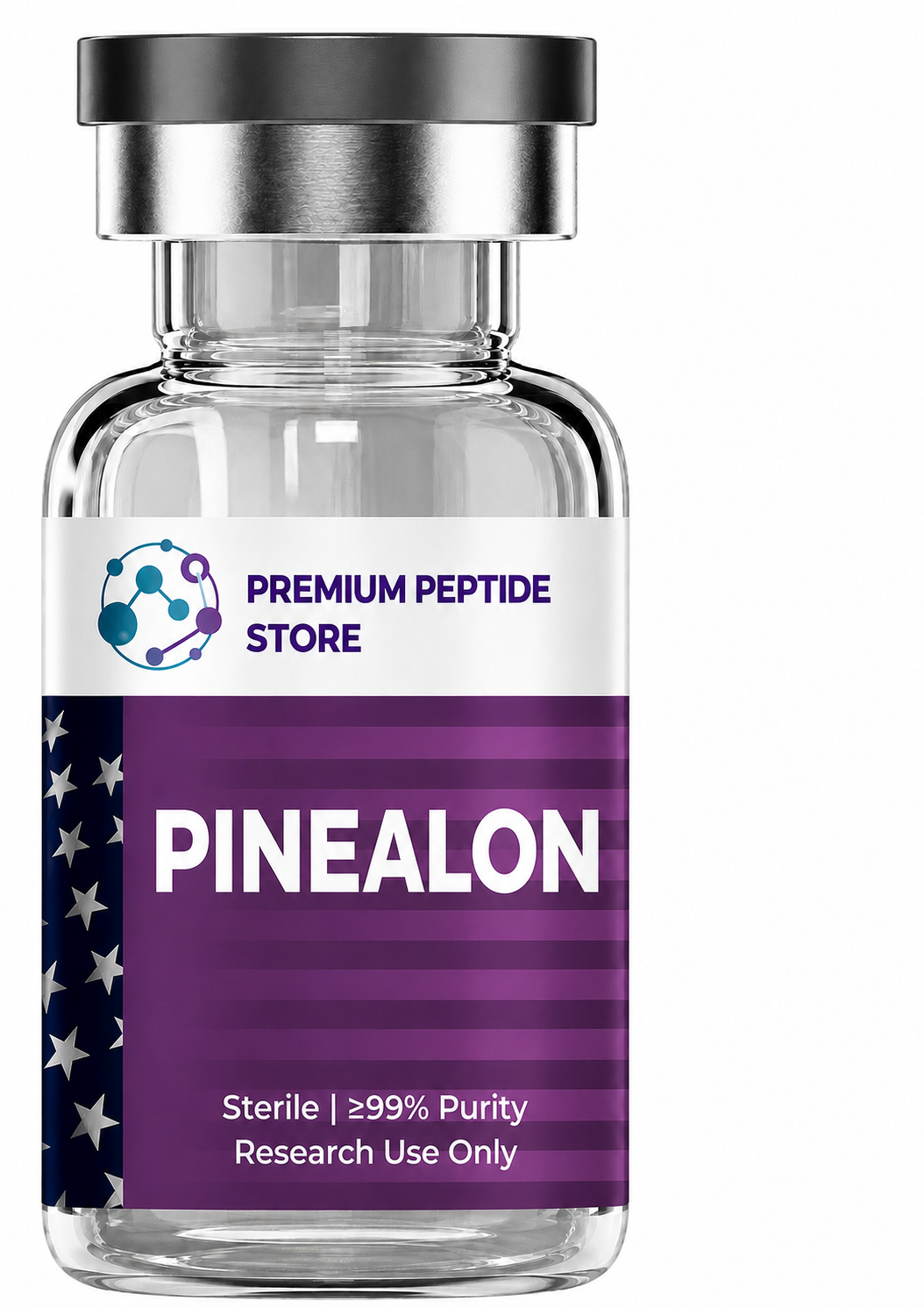
Buy Pinealon Online
Buy Pinealon Online has attracted growing interest among people researching peptides, healthy ageing, cognitive function, and cellular research. Scientists study this short peptide for its potential role in cellular processes and age-related biological pathways. Online discussions often describe Pinealon as a compound associated with brain health and longevity, but researchers still need more evidence to establish its effectiveness and safety in humans.
Understanding what Pinealon does, what researchers study, and what remains uncertain can help readers make informed decisions about peptide research.
What Is Pinealon?
Pinealon, also known as AEDG, represents a short peptide consisting of three amino acids. Researchers have investigated Pinealon in connection with cellular regulation, ageing, and nervous-system function.
Scientists became interested in Pinealon because peptide signalling can influence biological processes at the cellular level. Research involving Pinealon has explored its potential relationship with gene expression, oxidative stress, cellular ageing, and neurological processes.
However, laboratory and preliminary research does not automatically establish a proven medical benefit. Readers should distinguish scientific investigation from established clinical treatment.
How Does Pinealon Work?
Researchers continue to investigate the precise mechanisms associated with Pinealon. Studies have explored how small peptides may interact with cellular pathways and influence processes associated with ageing and cellular function.
Some research has focused on gene-regulatory activity and the way certain peptides may affect cellular responses. Scientists also examine whether Pinealon could influence processes associated with oxidative stress and age-related changes.
The available evidence does not provide enough information to describe Pinealon as a proven anti-ageing treatment or a guaranteed cognitive-enhancement compound.
Pinealon and Healthy Ageing Research
Healthy ageing represents one of the major areas of interest surrounding Pinealon. Researchers investigate biological mechanisms that contribute to cellular ageing and age-associated changes.
Scientists study oxidative stress, mitochondrial function, inflammation, DNA regulation, and cellular repair when they examine healthy ageing. Peptide research may provide useful insights into some of these pathways.
Pinealon has appeared in research discussions involving age-related biological processes, but consumers should avoid interpreting preliminary findings as proof that the peptide can extend lifespan or reverse ageing.
Scientific research requires controlled studies, reproducible results, and appropriate human clinical trials before researchers can establish reliable medical conclusions.
Pinealon and Cognitive Research
Another area of interest involves neurological and cognitive research. Scientists continue to investigate compounds that may influence brain-related cellular pathways.
Pinealon has generated attention because researchers have explored its relationship with neurological processes. Some experimental research has examined potential effects related to memory and age-associated cognitive changes.
However, readers should approach claims about memory enhancement, improved concentration, or protection against neurological disease with caution. Researchers need stronger human evidence before they can confirm such claims.
Potential Areas of Scientific Interest
Researchers may investigate Pinealon in several areas, including:
- Cellular aging
- Oxidative stress
- Gene expression
- Neurological processes
- Cognitive research
- Cellular regulation
- Longevity research
- Age-related biological changes
These research categories describe areas of scientific investigation rather than guaranteed health outcomes.
Why Research Evidence Matters
Online peptide discussions often contain strong claims about benefits. Scientific evidence requires a different standard.
Researchers evaluate a compound through laboratory studies, animal research, pharmacological investigations, and controlled human trials. Each stage answers different questions about biological activity, effectiveness, dosage, and safety.
A laboratory finding may demonstrate that a compound interacts with a particular pathway. That finding does not prove that the same effect occurs in humans.
Similarly, an animal study cannot automatically predict human outcomes. Researchers need appropriately designed human studies to establish meaningful clinical evidence.
Pinealon Safety Considerations
People should take safety seriously when researching experimental peptides. Limited clinical evidence can create uncertainty about appropriate use, long-term effects, interactions, and individual responses.
Potential risks can also arise from product quality. Unverified products may contain incorrect concentrations, contaminants, or ingredients that differ from their labels.
Anyone considering an experimental peptide should discuss the subject with a qualified healthcare professional. Medical guidance becomes particularly important for people who take prescription medicines or have existing health concerns.
Never assume that a peptide remains safe simply because online sellers describe it as natural, advanced, or well researched.
Quality and Responsible Research
People who explore peptide research should evaluate information carefully. Reliable sources should clearly distinguish established evidence from experimental findings.
Useful questions include:
- What studies support the claim?
- Did researchers conduct the study in humans?
- Did the study include an appropriate control group?
- Did researchers publish the results in a reputable scientific journal?
- Does the evidence support the specific claim being advertised?
- What safety information exists?
- Does a regulatory authority recognise the compound for the claimed use?
These questions help readers avoid exaggerated marketing claims.
Pinealon vs. Established Medical Treatments
Pinealon should not replace established medical treatments. Researchers continue to investigate its biological properties, while approved medications undergo extensive evaluation for quality, safety, effectiveness, and appropriate use.
People experiencing cognitive concerns, sleep problems, fatigue, or other persistent symptoms should seek professional medical evaluation. An underlying medical condition may require an established diagnostic or treatment approach.
Using an experimental compound without professional guidance can delay appropriate medical care.
Frequently Asked Questions
What is Pinealon?
Pinealon is a short peptide, also known as AEDG, that researchers have studied in connection with cellular ageing, neurological processes, and gene-regulatory pathways.
Does Pinealon have proven anti-aging effects?
Current research does not provide sufficient evidence to describe Pinealon as a proven anti-ageing treatment. Scientists need stronger clinical evidence to establish such claims.
Does Pinealon improve memory?
Researchers have explored Pinealon in neurological and cognitive contexts, but available evidence does not establish reliable memory-enhancement effects for general consumers.
Is Pinealon approved as a medicine?
Regulatory status varies by jurisdiction and intended use. Consumers should consult current information from appropriate national health authorities and qualified healthcare professionals.
Should people use Pinealon without medical guidance?
People should not self-administer experimental compounds without appropriate professional guidance. A healthcare professional can explain potential risks, uncertainties, and legitimate treatment options.
Final Thoughts
Pinealon remains an interesting subject within peptide and longevity research. Scientists continue to examine its potential relationship with cellular regulation, ageing, oxidative stress, and neurological processes.
At the same time, consumers should separate scientific investigation from marketing claims. Preliminary findings cannot guarantee specific health outcomes, and limited human evidence creates important uncertainty around effectiveness and long-term safety.
Anyone researching Pinealon should prioritise reputable scientific literature, regulatory information, and professional medical advice. Responsible research allows people to understand both the potential and the limitations of emerging peptide science.
Contact Us
WhatsApp Us: +1 (515) 215-5496
Visit Our Website: https://premiiumpeptidestore.com/
| Quantity | 5mg *10vials, 10mg*10vials, 100mg *10vials |
|---|
Be the first to review “Buy Pinealon Online”
Related products
Lyophilized
Lyophilized
Lyophilized
Lyophilized
Lyophilized
Lyophilized
Lyophilized
Lyophilized
Reviews
There are no reviews yet.